
- Recent Acquisitions
- Modern and Post War
- Paintings
- Works on Paper
- Black & White Drawings
- Figure Studies
- Chicago Modern
- Mid-Century Modern
- Architectural & Design Studies
- Contemporary
- New Bauhaus / Institute of Design
- American Scene / Social Realism
- Impressionism & Post-Impressionism
- Landscapes
- City Scenes
- World's Fair Scenes
- African American Artists
- Women Artists
- Figurative
- Sculpture
- Mural Studies
- Still Life
- Large Scale Works of Art
- Fine Prints
- Artist Index
14-119 Merchandise Mart Plaza
Chicago, Illinois 60654
(312) 644-8855
info@richardnortongallery.com


Gallery Hours
Monday through Friday
9 am to 5 pm
©2026 Richard Norton Gallery LLC
Francis Grady
American, 1893 - 1978
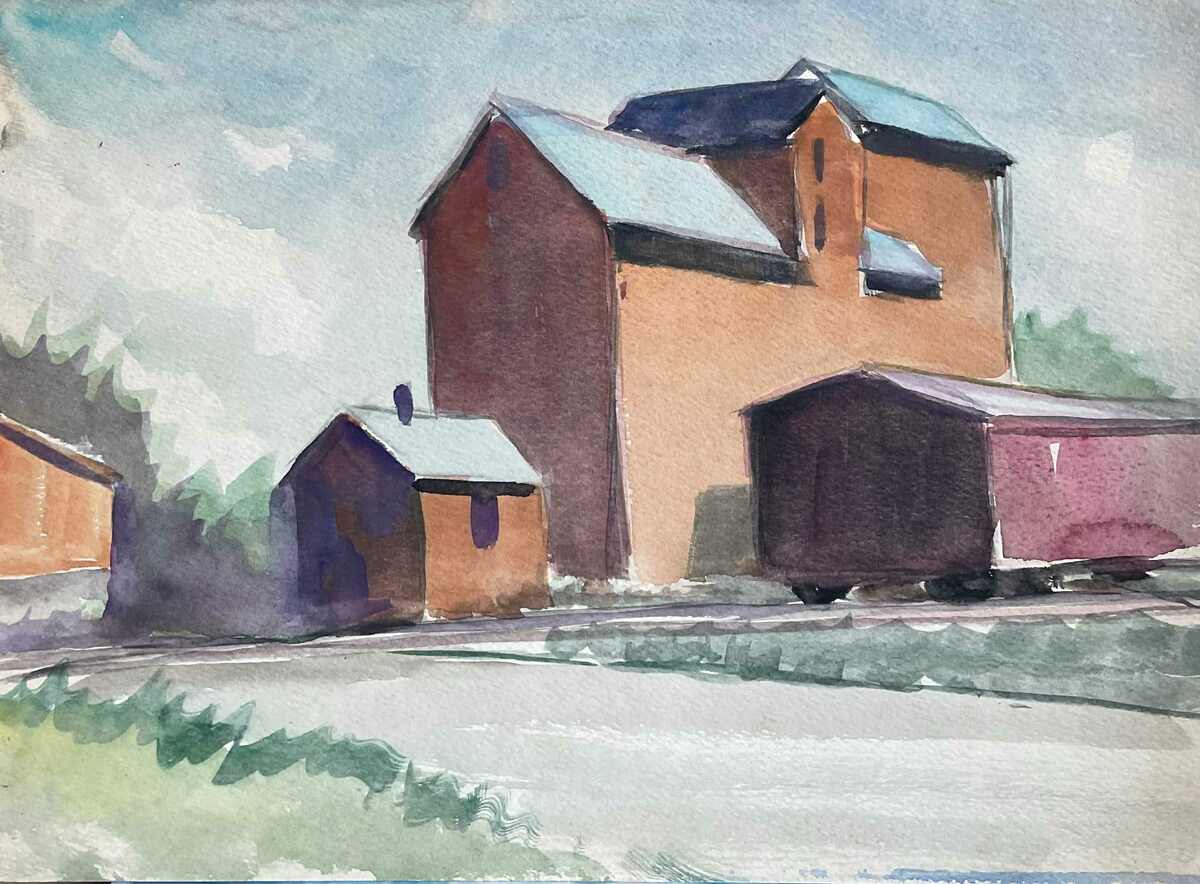
Francis Grady was born in 1893 on a farm near Madison, Wisconsin. He attended Oregon High School but left, as the family could not afford it, and began working on his father’s farm. Although no one ever encouraged him to pursue art, he always enjoyed drawing. His art career was paused as he moved around for jobs on railroads, farms, and a Native American reservation. During World War I, he spent a year-and-a-half in France working with the engineering corps. Here he began to create ink, pencil, and crayon drawings on peasants, soldiers, and French villages. In 1919 he returned to Madison, got married, and began renting a farm nearby. He entered the University of Wisconsin in the fall of 1923 and graduated in 1926 with a Bachelor of Philosophy degree, never having taken any art classes. He continued to bounce from job to job, working as a salesman, truck driver and the Federal Civil Service. In 1934 while working on soil control and conservation work, he began to draw the nature around Thunder River and Peshtigo River in Wisconsin. One of his colleagues saw his sketches and suggested that he learn the art of etching. Three years later he was again encouraged to make a print of his pictures, and though the results were poor, they encouraged him to learn proper technique. Soon after, he constructed a press and began to learn how to make prints. By 1938 he was producing and selling his own prints. He joined a sketching club in La Crosse, WI, and began selling his prints at two to five dollars each. As his career grew, Grady built a printing laboratory in his basement. He used industrial zinc plates which he etched images onto with a phonograph needle. The wiping process of ink from the print plate was done using the heel of his hand. Watercolor was another preferred medium for scenes of Wisconsin. His main subjects included rolling hills and rocks, shores of lakes, and old stone bridges in towns such as Eau Claire and Milwaukee. His print “Swamp Buck” was accepted in the 1944 Milwaukee Art Institute exhibit. He died in 1978.
14-119 Merchandise Mart Plaza
Chicago, Illinois 60654
(312) 644-8855
info@richardnortongallery.com
Gallery Hours
Monday through Friday
9 am to 5 pm
©2026 Richard Norton Gallery LLC